The Broward Contradance
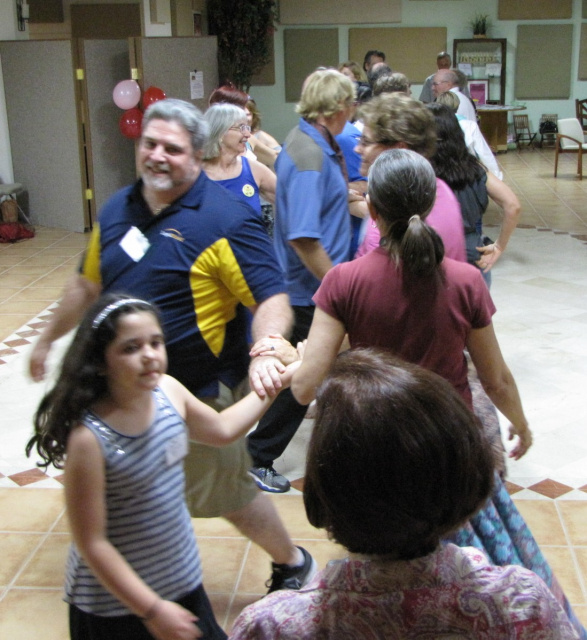
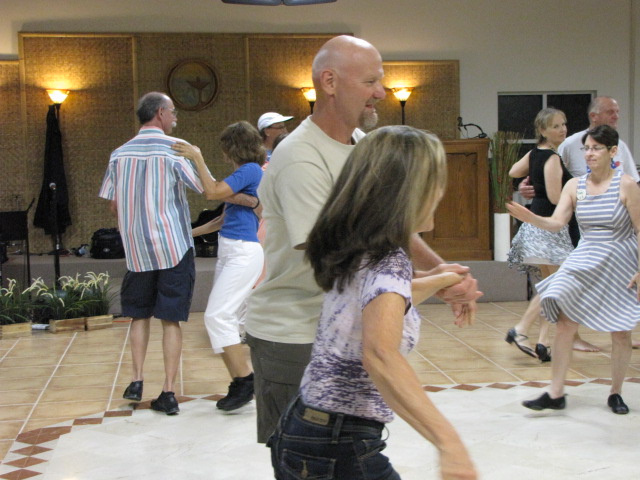
It’s community interaction at its best. You dance to the music with your partner, with other couples
in your group of four, then everyone else in your line.
- Singles love it because you get to dance and meet so many new faces.
- Families like it because it allows mixed ages to get some social skills in a healthy environment.
The continuous motion provides a great workout (provided you don’t spend too much time
at the snack table)
By the end of the evening you’ll have smiled at and danced with everyone else in the hall.
HOW IT WORKS
In contra dancing two people form a couple and pair for figures with the couple next to them as the dance
caller cues the changes. Then positions change and partners dance with another couple, and then
another, repeating simple movement patterns until the dance is completed. Most contras are done in
long lines with your partner opposite you. Each dance lasts about 6 to10 minutes depending on the
number of dancers.
Figures are simple and are usually done with a walking step, although skipping, polka, and clogging steps
may also be used. You may have heard some of these figures’ names from square dancing -- back to back
(do-si-do), star right and left, allemande, sashay, promenade, turn your partner, swing your partner.
In a contra dance you’ll often hear: contra corners, buzz step, ladies chain. All of the motions are simple
and can be done from the beginning. Knowing where to go next can take some repetition, but the caller
and experienced dancers will guide you.
Dress is casual. No special classes are required, but most groups have sessions before a dance to
introduce beginners to the basic moves. Contra dancing is more fun than formal: men ask women
to dance, women ask men, and it’s okay to dance with someone of your own gender.
The Tunes
Dances are usually done to lively acoustic music that energizes the dancers, which in turn energizes
the musicians. The music for contras is based on fiddle tunes, reels and jigs with melodies that parallel
the dance figures. Instrumentation is usually acoustic strings (fiddle, guitar, and mandolin) for melody
with some bass or hand percussion for support.
OMG You just might dance to the same time-tested tunes your great-grandparents enjoyed.